
When structural steel needs intumescent paint and when it does not: fire ratings, exposed steel, film thickness and the records that prove it.
Read More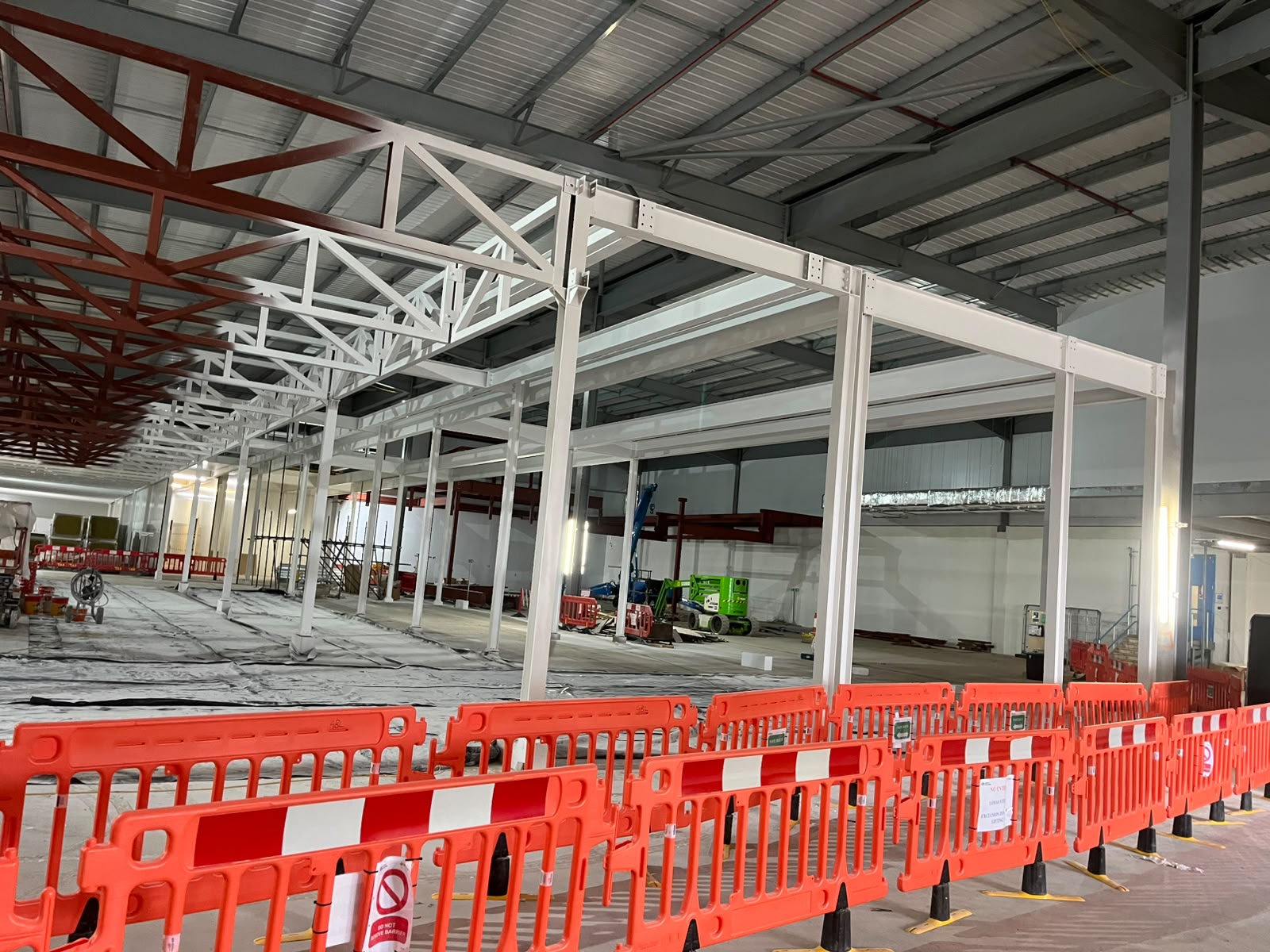
Structural steel does not always need intumescent paint. Whether it does depends on the fire rating the building needs, where the steel sits, and what else is protecting it. Getting that decision right early saves money and programme. Getting it wrong shows up at building control sign off.
This is how the question is usually settled on the projects GSD London works on as a subcontractor applying intumescent coatings to steel in London.
Intumescent coatings look like a thick paint when applied. In a fire they swell to many times their thickness and form an insulating char that slows the rate at which the steel heats. Steel loses strength as it gets hot, so the coating buys time: 30, 60, 90 or 120 minutes depending on the specification. It is one form of passive fire protection. Boards and sprayed cementitious systems do the same job in a different way.
The fire strategy for the building sets the period of fire resistance each element needs. The structural engineer identifies which members are load bearing and what section sizes they are. Where a steel member has to achieve a rating and nothing else is protecting it, it needs protection, and intumescent paint is often chosen because it follows the shape of the steel and leaves it exposed to view.
Typical cases: exposed columns and beams in an atrium or feature space, steel in a refurbishment where the existing protection has been removed, and transfer structures where an architectural finish is wanted.
Steel that is already protected by the construction around it, such as members encased in concrete or boxed in fire rated boards and linings, does not need a coating on top. Steel that carries no structural load and does not form part of a compartment line usually needs none either. Some steel achieves the required rating by section size alone at low ratings, which the engineer confirms by calculation.
Applying intumescent paint to steel that does not need it is wasted money. Leaving it off steel that does is a defect that has to be put right before handover.
The rating is achieved by dry film thickness, and the thickness needed depends on the steel section and the coating product. The manufacturer's loading tables give the figure for each section factor. On site the coating is applied in passes and measured as it goes, with dry film readings taken and logged against each member. The record is issued as part of the handover pack. Without it there is no evidence that the rating has been achieved.
Where the steel is visible in the finished building, a compatible decorative topcoat is applied after the basecoat has been checked. Only topcoats approved for the system are used, because an incompatible finish can affect how the coating performs.
The fire strategy or the fire ratings by element, the steel drawings with section sizes, and the specified coating system where one has been chosen. From those we can confirm which members need coating and price the works.
See the intumescent coatings and fire protection page for scope and how the work runs on site.


GSD London Ltd
Company Number: 10543768
VAT Number: 261280131
Head Office
231 St John Street,
London EC1V 4NG


