
Case study: leisure club refurbishment
We delivered the decoration package on the refurbishment of David Lloyd St Neots for main contractor Bower & Kirkland. It ran to a sixteen-week programme, completed in early 2026, across a health and racquets club that stayed open to members throughout.
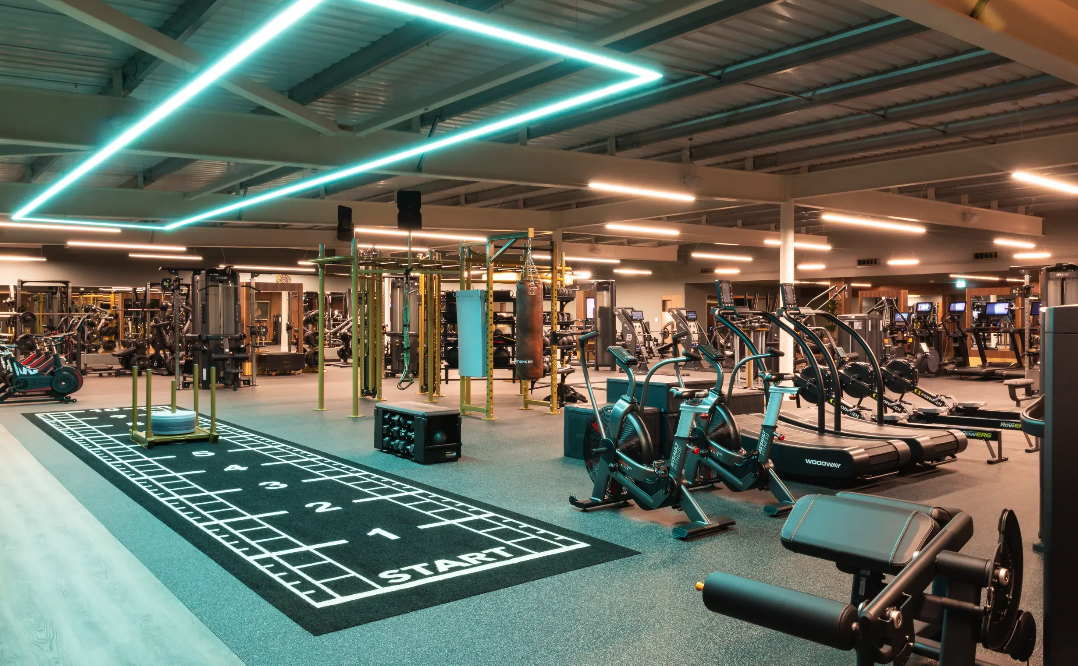
Client
Bower & Kirkland
Location
St Neots, Cambridgeshire
Sector
Leisure refurbishment
Programme
16 weeks
We were appointed by Bower & Kirkland to carry out the decoration package on the refurbishment of David Lloyd St Neots, the health and racquets club operated by David Lloyd Clubs. The works ran across the gym floor, studios, changing rooms and front-of-house areas over a sixteen-week programme, completing in early 2026.
The club remained open to members for the duration. That is the defining constraint on a leisure refurbishment: areas have to be taken, decorated, dried and handed back inside windows measured in hours rather than weeks, with wet trades, gym equipment and members' routes all moving around each other. Sequencing and protection carry as much weight as the finish itself.
Changing rooms and wet areas: walls, ceilings and joinery
Gym floor, studios and circulation routes
Café, lounge and reception areas
Spray application to exposed soffits, structural steelwork and high-level services
Protection, phasing and handback around a club open to members
Leisure interiors are a demanding environment for a paint system: humidity in the changing and wet areas, constant contact wear through circulation routes, and cleaning regimes that would strip a domestic emulsion inside a season. Wet areas were specified in moisture-resistant systems, circulation and gym walls in scrubbable finishes, and the exposed soffits, steelwork and services were spray-applied to a consistent dark finish so the ceiling void reads as one plane above the equipment.
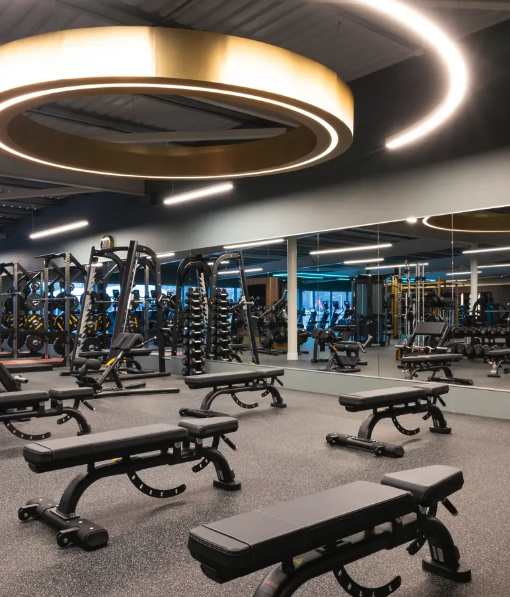
Refurbishing a trading club is judged on what the members notice. That should be nothing but the finish.
The club traded throughout and the works ran in normal hours, phased area by area rather than out of hours. Each area was hoarded and protected before work started, with dust and odour controlled so neighbouring spaces stayed in use.
Changing rooms, showers and poolside surfaces need systems specified for moisture and cleaning chemicals, not general-purpose emulsion, and enough drying time inside the handback window to reach a serviceable finish.
Rather than closing the club in one block, the programme was broken into areas and each one returned to service as it completed. Changing facilities were taken a side at a time so members always had provision, and the gym floor was worked in sections around the equipment layout.
Decoration sits at the end of a refurbishment sequence and absorbs the slippage in front of it. Working to a fixed reopening date meant re-sequencing around the trades ahead of us without extending the sixteen-week programme.
We are a commercial painting contractor based in London, and we travel for national contractors and multi-site leisure operators. St Neots was resourced and managed to the same standards as our Central London work.

What leisure operators and main contractors ask us before appointing a decoration subcontractor.
Yes, and it is most of what we do in leisure. Areas are hoarded and protected before we start, worked in sections and handed back clean, with low-odour water-based systems so adjoining spaces stay in use. At David Lloyd St Neots the club traded throughout the sixteen-week programme.
Wet areas need moisture-resistant, scrubbable systems specified for humidity and cleaning chemicals rather than general-purpose emulsion, which will fail within a season in a shower block. Circulation and gym walls take hard-wearing scrubbable finishes, and exposed soffits, steelwork and services are usually spray-applied.
That is set by drying and curing times, not by how fast we can apply the paint, so we specify quick-drying systems where the handback window is tight and programme the sequence around it. On a phased leisure refurbishment we plan in areas that can be released within a day or a weekend rather than closing a whole floor.
We hold CHAS and Constructionline Gold accreditation, and we are certified to ISO 45001 for occupational health and safety. We work to the health and safety standards main contractors expect. Policies and certificates are on our health and safety page and available for your prequalification pack.
We are a commercial painting contractor based in Islington and most of our work is in Central and Greater London, but we travel for national contractors and multi-site leisure operators. St Neots is in Cambridgeshire and was resourced and supervised to the same standards as our Central London projects.
See the sectors we work in →Talk to the team that decorated David Lloyd St Neots around a trading club.

GSD London Ltd
Company Number: 10543768
VAT Number: 261280131
Head Office
231 St John Street,
London EC1V 4NG


