
Case study — High-end residential
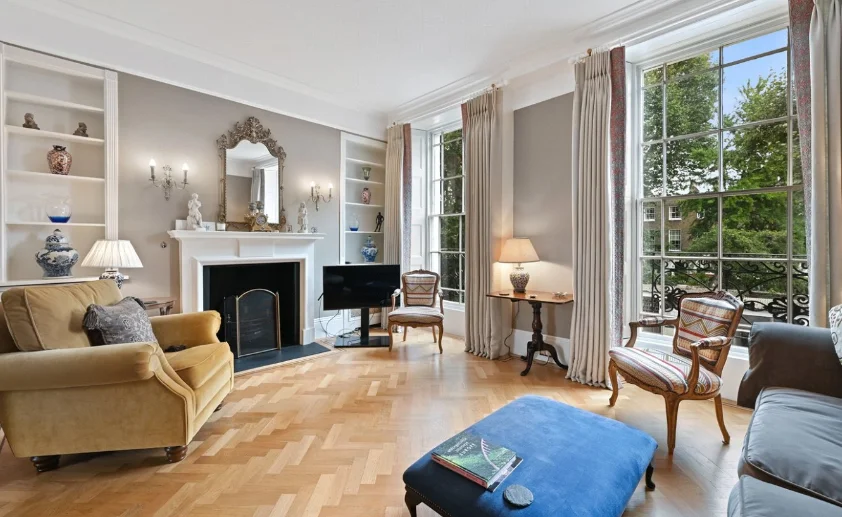
We delivered the decoration package on the refurbishment of a period townhouse on Pembroke Square, Kensington for main contractor Nunnery, covering the full house.
Client
Nunnery
Location
Kensington, London
Sector
High-end
Scope
Whole house
We were appointed by Nunnery to carry out the decoration package on the refurbishment of a period townhouse on Pembroke Square, Kensington. The works covered the full house, including original joinery, cornices and panelled rooms.
Kensington's garden squares are conservation area stock: the fabric is original, the rooms are tall and the daylight is generous, which means every surface is read in raking light from a window. Preparation of the existing joinery and plasterwork took the bulk of the labour, and the finishes were chosen to sit correctly against the period detail rather than flatten it.
Reception rooms, bedrooms and bathrooms across four floors
Staircase, hallways and circulation
Hand preparation of original joinery, shutters and cornice
Sash window preparation and redecoration
Sample panels and colour approval in situ
Walls and ceilings were finished in flat, low-sheen emulsions appropriate to a period interior, with water-based eggshell to joinery, shutters and skirtings built up in thin coats over fully filled and sanded substrates. Cornice and decorative plaster were cut in by hand to keep the profiles crisp, and the sash windows were prepared, repaired where sound and redecorated rather than replaced.
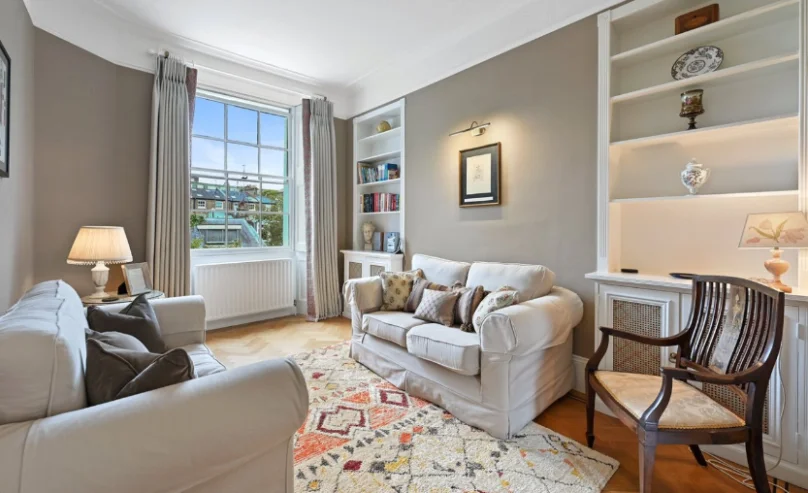
Tall rooms, generous daylight and original joinery. Every surface is read in raking light from a window.
Most of the labour went into preparing existing joinery and plasterwork — filling, sanding and inspecting in raking light before any finish coat. On original substrates, nothing else recovers a poor surface.
Shutters, sash boxes, cornice and skirtings were repaired where sound and redecorated rather than stripped out — the right approach on conservation area stock and the one that keeps the rooms reading correctly.
Colours were signed off from sample panels viewed in the room they belonged to, under its own daylight — the only reliable way to judge a period palette against original detail.
No lay-down space, a single stair for every trade, controlled parking and residential neighbours either side. Materials were called off in small loads and the stair kept protected and clear.
Original floors, new stone and joinery were in place ahead of us, so protection and a disciplined snagging and making-good routine carried as much weight as the decoration itself.
What contractors and homeowners ask us before appointing a decorator on a period property.
Constantly. Much of our residential work is in Kensington, Chelsea and Belgravia, where the stock is period and often listed or in a conservation area. Original fabric is repaired and redecorated rather than stripped out, and where consent applies we agree methods and materials before starting.
By hand. Shutters, sash boxes, cornice and skirtings are filled, sanded and inspected in raking light, made good with appropriate repair systems where the timber has moved, then built up in thin coats. On original substrates the preparation is the job; the finish coats simply show whether it was done.
Yes. We work room by room with contents protected and floors covered, use low-odour water-based systems so the house stays habitable, and leave the site clean at the end of each day. On a garden square we also keep deliveries small and the stair clear, as there is nowhere to lay materials down.
From sample panels viewed in the room under its own daylight, before we proceed. Tall Victorian rooms with generous glazing show a colour completely differently to a colour card in the hall, and a period palette has to sit against original cornice and joinery rather than flatten it.
All of Central and Greater London from our base in Clerkenwell, with regular work across Kensington, Chelsea, Belgravia, Mayfair and St John's Wood, and projects across the South East for national contractors.
See the sectors we work in →Talk to the team that decorated Pembroke Square.

GSD London Ltd
Company Number: 10543768
VAT Number: 261280131
Head Office
231 St John Street,
London EC1V 4NG


